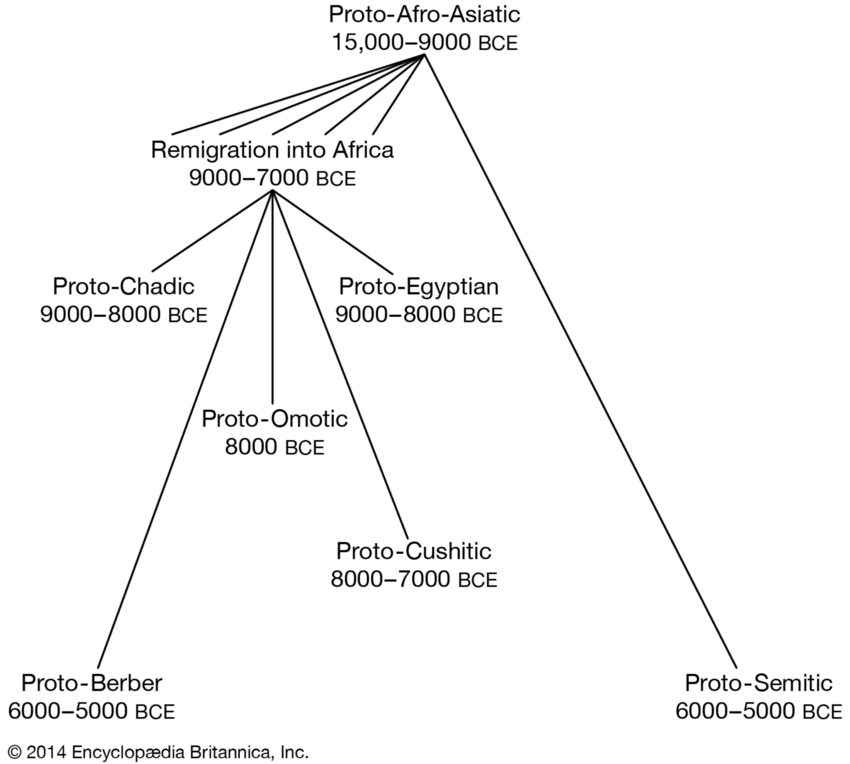
Proto-Afro-Asiatic (PAA) is the hypothetical ancestor language of the vast Afro-Asiatic language family, spoken roughly 10,000-18,000 years ago, likely in Northeast Africa or West Asia, with branches including Semitic (Arabic, Hebrew), Berber, Chadic (Hausa), Cushitic (Somali), Omotic, and Egyptian. Linguists reconstruct PAA features like a feminine marker (t) and emphatic consonants, but its exact sound and location remain debated, though theories link it to ancient hunter-gatherers like the Natufians.
Key Characteristics & History
- Hypothetical Origin: PAA is reconstructed through comparison, not directly attested, with estimates placing it around 12,000-18,000 years ago (16,000-10,000 BCE).
- Homeland Theories: Major ideas suggest a homeland in the Sahara (Igor Diakonoff), the Levant (Natufian culture), or the Red Sea coast.
- Major Branches: It diversified into Semitic, Berber, Chadic, Cushitic, Omotic, and Egyptian branches.
- Shared Features: Reconstructed elements include a feminine marker (t), second-person marker (k), and root-and-pattern morphology, notes Encyclopedia Britannica and StudySmarter UK.
- Cultural Significance: The family's spread influenced significant cultural developments, trade, and literature across North Africa, the Horn of Africa, and the Middle East.
Modern Examples of Branches
https://www.britannica.com/topic/Semitic-languages/Verbal-morphology
1410479/resources/000/000/000/006/198/6198944_680x480.jpg/resources/000/000/000/006/198/6198944_680x480.jpg
1410480/resources/000/000/000/006/198/6198948_680x480.jpg/resources/000/000/000/006/198/6198948_680x480.jpg


 M Balance10 января 2026
Комментарии
Показать все комментарии